
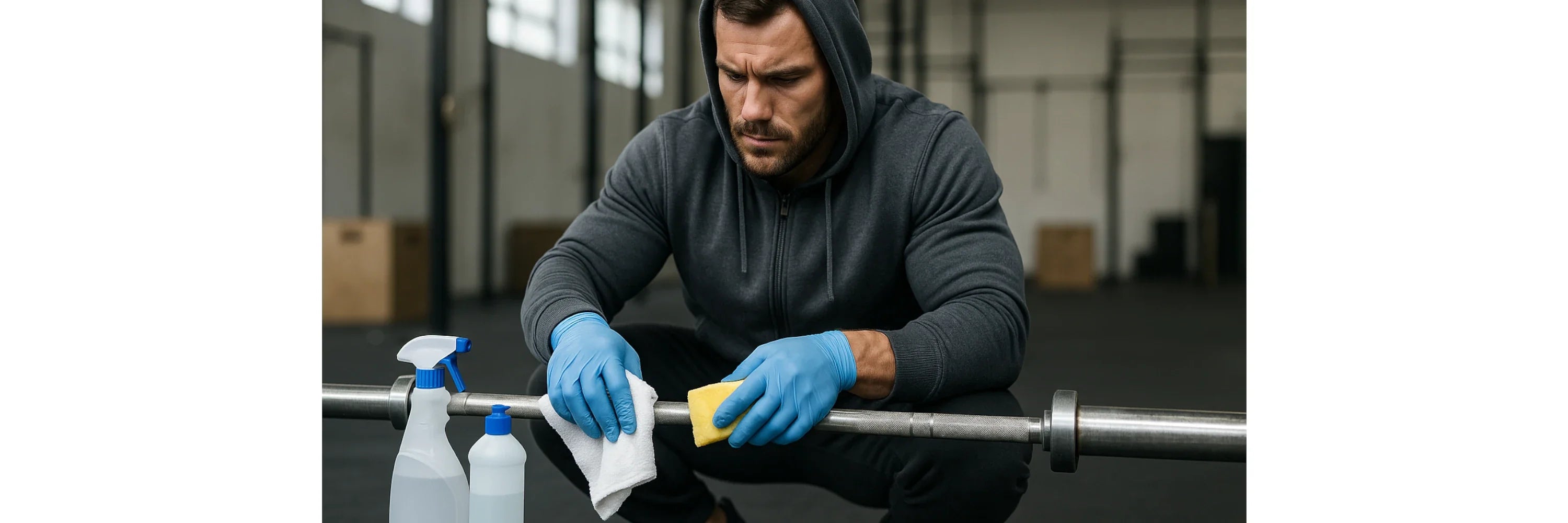
This is how your weightlifting barbell will outlive you
A well-maintained barbell is essential for safe and efficient training in weightlifting and CrossFit. Without proper cleaning and storage, a barbell can rust more quickly, lose its spin, or even become bent. In this article, we dive into the proper handling of the barbell and what to pay attention to regarding its maintenance.
Proper cleaning of the barbell after training
The barbell should be cleaned after every workout to remove chalk residue, sweat, and dirt. This prevents rust formation and ensures that the knurling retains its grip.
Daily cleaning
- Use a nylon brush to brush chalk residue out of the knurling.
- Wipe the bar down with a dry, lint-free cloth.
- If necessary, use a slightly dampened microfiber cloth with isopropanol or a mild cleaner. Ensure you do not use water and that no liquid enters the sleeves.
Monthly deep cleaning
- If magnesium is stubbornly stuck, you can use a brass brush for better cleaning performance. Never use a steel brush, as this can destroy the chrome plating.
- A thin layer of machine oil or barbell oil protects the bar from corrosion.
- Wipe off excess oil with a cloth.
Maintenance of the sleeves and bearings
The sleeves of a weightlifting barbell contain needle bearings or bushings that ensure smooth rotation of the bar. To ensure they always function perfectly, they should be maintained regularly.
- Every 3-6 months: If the sleeves are sluggish or squeaky, add a few drops of light oil into the bearings.
- Do not use thick grease; heavy lubricants can impair the spin.
- Never let water or cleaning agents penetrate the sleeves, as this can damage the bearings.
Avoiding damage to the barbell through proper handling
Barbells are built for heavy use, but improper use can damage them irreparably.
Do's:
- Only drop with weight plates: An empty bar should never be dropped on the floor.
- Only drop on suitable surfaces: If a bar is dropped, only do so on a platform or rubber surface with sufficient cushioning.
- Always secure weights with collars: This serves your own safety and prevents the weight plates from shifting during lifts.
Don'ts:
- Do not bang the bar against hard metal racks: This can lead to damage to the coating or the bearings.
- Do not store with weight plates loaded: Storing a loaded barbell in a rack can cause the bar to deform over time.
- Do not store in a humid environment: Moisture promotes rust formation and can damage the bearings.
Optimal storage of the barbell
Proper storage contributes significantly to the lifespan of your barbell.
Horizontal vs. vertical storage
- Horizontal storage is particularly gentle, as the weight remains evenly distributed and the oil in the bearings stays in place.
- Vertical storage can lead to an uneven distribution of lubricant inside the bar over the long term. If you store the bar vertically, make sure the contact point on the floor is padded.
This point is especially important for competition bars.
General storage tips
- Always store unloaded to avoid deformation.
- Store dry and at moderate temperatures.
- Do not leave lying directly on the floor.
What to do in case of rust or damage
If rust forms:
- Remove light surface rust with an oil-soaked cloth.
- For stubborn rust, use a brass brush and then apply maintenance oil.
If the barbell has deformed:
- Slight deformations can be remedied by carefully pressing against them.
- Severely bent bars should be replaced as they are no longer safe.
Tips for trainees
It is not just the maintenance of the barbell that is important, but also the responsible handling by the trainees themselves. Be careful not to cover the bar with an excessive amount of chalk, as residue can become stuck. Clean the bar after training, especially if you sweat heavily, to prevent corrosion. In addition, you should ensure that you drop the barbell correctly. Controlled lowering instead of wild throwing ensures not only a longer lifespan for the equipment but also more safety in the gym.
Conclusion
Proper care and handling of the barbell ensure it stays in top condition for years. Regular cleaning, occasional oiling of the bearings, mindful handling, and proper storage are the keys to a long-lasting and perfectly functioning barbell. With these simple measures, you can significantly increase the lifespan of the barbells in your gym.



