
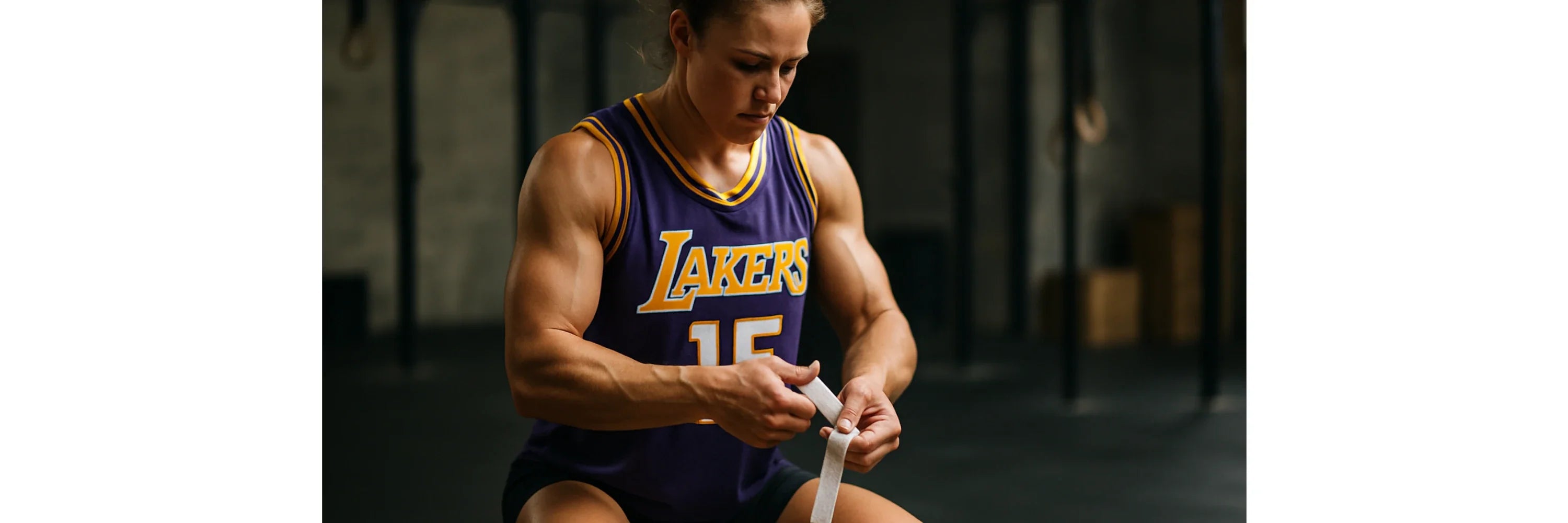
How to properly tape your thumbs for weightlifting
Anyone who regularly does CrossFit or weightlifting knows the feeling: the barbell is firmly in your hand, the weight pulls down, and your thumb gets pinched between the bar and your fingers. We are talking about the hook grip, a gripping technique that originated in Olympic weightlifting and has since become firmly established in CrossFit as well. It provides maximum hold, especially during heavy lifts – but it has a catch: it can be quite uncomfortable for the thumb. With increasing training frequency, painful pressure points, skin irritation, or small tears can occur on the thumb. This is not only annoying but also significantly restricts your training. The good news: with the right tape, you can protect your thumb – simply, quickly, and effectively. But what do you need to look out for with the hook grip? Which tapes are best suited? How do you properly tape your thumb for the hook grip?
In a nutshell
For those who want to skim but still know what it's all about.
- Protection via tape: The hook grip is effective but puts heavy strain on the thumb – tape protects against friction, tears, and pressure points.
- Proper taping: Clean, dry hands, wrap around the thumb about twice (without covering the fingernail), and press firmly – wait 2–3 minutes for the adhesive to set better.
- Choose the right tape: Classic sports or kinesio tapes are unsuitable – use special, elastic hook grip tape with a grippy surface for optimal hold.
And here we go
The hook grip is indispensable but takes some getting used to
With the hook grip, you wrap your thumb around the barbell and then clamp it with your index and middle fingers. This technique might look a bit strange at first glance, but it is extremely effective, especially for heavy cleans or snatches. It prevents the bar from slipping out of your hand in the middle of the pull and provides more control and safety. However, the thumb takes the full brunt of the load with this gripping technique. Due to the friction against the knurling of the barbell, the pressure of the fingers, and the repeated movements, pressure points, skin irritation, or even small tears often occur.
Why taping is the best solution
A neatly applied tape acts like a second skin and takes on an important protective function. It reduces friction between the thumb and the barbell, protects the skin from tearing, and cushions the pressure exerted by the fingers on the clamped thumb. The result: less pain, longer training sessions, and more safety while lifting. Many athletes report that taping their thumb allows them to hold the hook grip significantly longer, even with heavy weight or many repetitions. Especially in CrossFit workouts, where you not only have to lift maximally but also grab the bar quickly and often, tape is almost a must. Furthermore, there are special types of tape that additionally improve grip through their textured surface. You slip less and can fully concentrate on your technique.
Instructions for properly taping your thumb
Step 1: Prepare your hands: Before applying the tape, your hands should be clean, dry, and free of moisturizer or other residues. If you have to apply tape during a workout, use a towel or your shirt to dry your hands thoroughly.
Step 2: Apply the tape: Pull off a piece of tape a few cm long and hold it with your index finger and the thumb you want to tape. Now wrap it around your thumb about twice. The tape should be firm, but not too tight. You can then tear off the tape. Make sure the end does not land in the area of the thumb where the barbell will later rest.
Step 3: Press the tape down: After wrapping your thumb, it may be the case that the hook grip tape is not yet laying smoothly everywhere. Enclose the taped thumb with the fist of your other hand and press the tape firmly all the way around.
Step 4: Activate the adhesive: The adhesive on hook grip tape is activated by heat. Therefore, wait about 2–3 minutes before starting your workout. This gives the adhesive time to develop its full bonding strength.
To tape the fingernail or leave it free?
When taping the thumb, the question often arises: should the tape also be pulled over the fingernail? In most cases, the answer is no. The fingernail does not provide a good surface for tape to adhere to. The smooth, hard surface means that the hook grip tape sticks less well there and peels off faster. Especially with sweaty hands or longer workouts, tape over the nail can start to slip. With the hook grip, nothing should definitely slip. In addition, tape that extends over the nail can uncomfortably restrict the mobility of the thumb. It may exert pressure on the nail bed or feel tight when bending. Not only does this feel distracting, but it can also be counterproductive for the hook grip. It is better to end the tape just below the nail so that the sensitive area of the thumb is protected, but the nail remains free. This maintains full mobility, the tape sits stably, and the hook grip works as it should.
Which tape is best for the thumb
Not every tape is suitable for thumb taping. Classic sports tapes from the first-aid kit are often too rigid and hold poorly, especially when you sweat. Kinesio tape is indeed elastic, but often too soft and slips quickly. Some also feel as if you were wrapping your thumb with adhesive tape. Special hook grip tape is ideal. These tapes are usually elastic, easy to tear off, and adhere reliably. In addition, the surface is slightly textured, which additionally improves the grip on the barbell.
Conclusion
Taping your thumb is more than just a protective measure. It is a real advantage for anyone who regularly trains with the hook grip. A well-applied tape spares the skin, reduces friction and pressure points, and even provides additional hold on the barbell thanks to its grippy surface. For the tape to have its full effect, the details count: it should be firm but not too tight, wrapped evenly, and leave the fingernail free if possible. This keeps your thumb mobile, your grip stable, and your training running smoothly without painful interruptions.



