
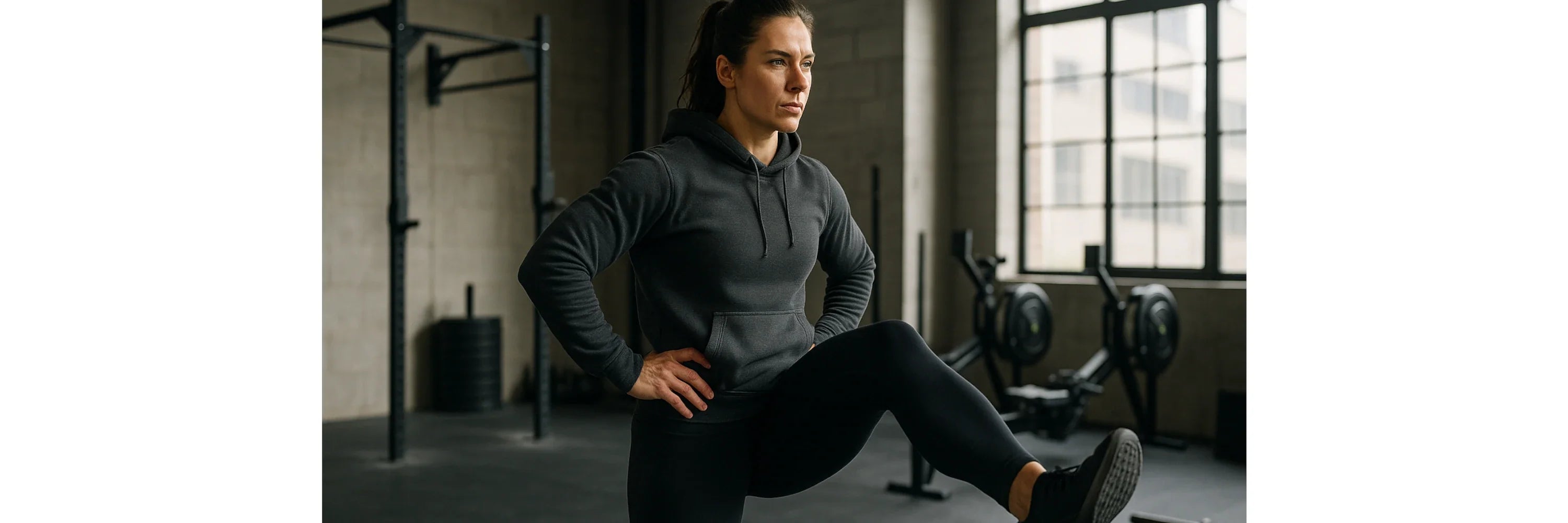
Why a good mobility warm-up makes you better at the clean and jerk
Olympic weightlifting is not just about strength, but also technique, stability, and mobility. A targeted mobility warm-up before training can make a significant difference in performance and injury prevention. But why is mobility important, and which exercises are particularly well-suited for it?
Why mobility is important before weightlifting
Improving range of motion: Disciplines like the snatch or clean and jerk require a high degree of mobility, particularly in the shoulders, wrists, thoracic spine, hips, and ankles. Without sufficient mobility, these movements cannot be performed efficiently, which degrades technique and increases the strain on other structures.
Injury prevention: Poor mobility can lead the body to develop unnatural compensation patterns. For example, restricted ankle mobility can cause the upper body to lean too far forward, which in turn places unnecessary strain on the lower back. Through targeted mobilization exercises, such compensations can be minimized.
More efficient technique: When you can move better, you will be able to keep the barbell closer to your body, squat deeper, and stand more securely in the overhead position. This not only leads to better technique, but also allows you to reach your full potential in weightlifting.
Higher performance capacity: A mobility warm-up optimally prepares your joints, tendons, and muscles for the load. This allows you to work powerfully from the start without wasting unnecessary energy on inadequate positions. Good mobility enables more efficient power transfer and improves your explosiveness.
Which mobilization exercises are particularly well-suited for the warm-up
To optimally prepare the most important areas for weightlifting, exercises for the ankles, hips, shoulders, and wrists should be integrated into your warm-up.
Ankle mobilization
- Goal: Improve range of motion for a deeper squat
- Exercise: Knee-over-toe, squat rock with or without a barbell
Hip mobilization
- Goal: More flexibility for a deeper and more stable squat
- Exercise: 90/90 stretch, couch stretch, pigeon stretch
Thoracic spine rotation
- Goal: Improve range of motion for better overhead positions
-
Exercise: Open book stretch, world's greatest stretch, frog stretch
Lat and shoulder mobilization
- Goal: Improve overhead position for snatch and jerk
- Exercise: Lat stretch with PVC pipe, pass-throughs with PVC pipe or resistance band, wall angels
Wrist mobilization
- Goal: Prepare wrists for clean and jerk
- Exercise: Wrist circles and extensions
Activation and stability
- Goal: Improve positions under load
- Exercise: Overhead squat with weight plate, duck walk
Conclusion
Mobility is a decisive factor for your progress in weightlifting. It not only improves your technique and power transfer but also helps you prevent injuries and train more efficiently in the long term. A regular mobility routine ensures more stable movement patterns, reduces muscular imbalances, and increases your performance. Invest 15–30 minutes before training in a targeted warm-up and take advantage of the benefits.



