
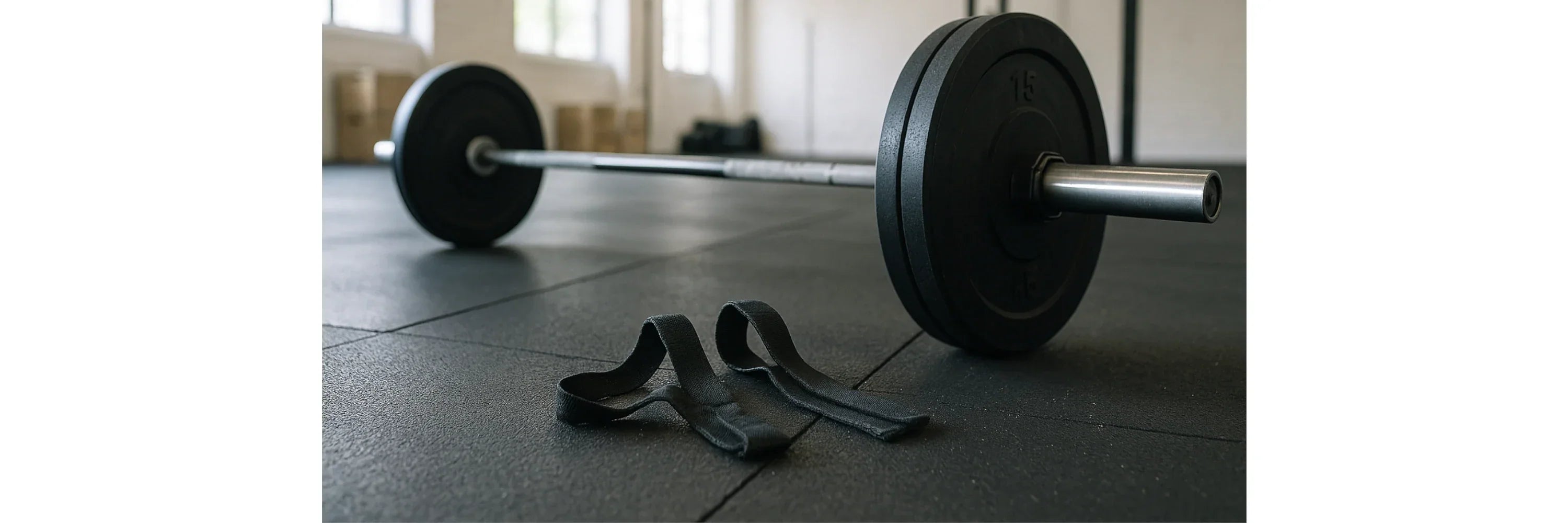
Using lifting straps: useful in weightlifting & CrossFit
Lifting straps are a popular training aid in strength sports, weightlifting, and CrossFit. They are usually made of robust fabric, leather, or nylon and relieve your grip strength, allowing you to move heavier weights. Wrapping them around the barbell strengthens your grip and helps you better control the load. However, they are not the right choice for every situation – here you will learn when lifting straps are useful and how to put them on correctly.
In a nutshell
Gripped instead of grilled – when your grip gives out before your muscles do.
- Lifting straps relieve grip strength so you can manage heavier weights and more repetitions during pulling exercises.
- Particularly useful for deadlifts, weightlifting, and CrossFit – anywhere your grip fails before the target muscles.
- Use strategically: Anyone who always trains with straps will neglect their own grip strength in the long run.
Let's get started
What are lifting straps used for?
Lifting straps are used in various areas of training, especially for disciplines or exercises where grip strength often becomes the limiting factor.
Weightlifting: In the snatch or pulling exercises for the clean, lifting straps are often used to focus on pulling power and technique without the grip failing.
Deadlift: During heavy deadlifts, lifting straps can prevent your grip from opening before the target muscles fail.
Rowing and lat pulldown exercises: To train the back more intensively in the gym without the forearms acting as a weak point.
Bodybuilding and strength training: Especially with high volume or when the focus is on muscle failure and progressive loading.
CrossFit: During workouts with many repetitions on the bar – such as deadlifts, cleans, or hang power cleans – lifting straps prevent the grip from tiring before the target muscles.
Hand injuries: If your hands have been affected by daily work, low temperatures, or training, lifting straps provide relief.
How to put on and use lifting straps optimally
With a little practice, you can put on lifting straps in a few seconds. Here is the step-by-step procedure:
- Loop around the wrist: Place the loop around your wrist so that the strap is firm but not constricting.
- Align the strap: Let the long end hang down on the palm side, towards the barbell.
- Wrap the bar: Feed the long end under the barbell and wrap it firmly around the bar from bottom to top.
- Tighten firmly: Roll the bar slightly toward you to tighten the strap, then grip normally – this pulls the palm of your hand closer to the weight.
- Both sides equal: Repeat the process for the other hand and check that both straps are equally tight.
Use lifting straps specifically for heavy or long sets – not for every repetition, otherwise, your grip strength will suffer in the long term.
What are the advantages of lifting straps?
- Relief of grip strength: Allows heavier weights to be moved without fingers or forearms fatiguing prematurely.
- Better activation of target muscles: Due to the reduced grip load, the focus can be placed more on the muscles being worked.
- Prevention of blisters and skin injuries: Especially with frequent training, they protect the hands.
- More repetitions and volume: Especially with high training volume, lifting straps can help you train with high intensity for longer.
What are the disadvantages of lifting straps?
- Weakening of grip strength: Those who train with lifting straps too often develop weaker grip strength in the long run.
- Dependence on lifting straps: Athletes who always train with straps have difficulty moving heavy weights without them.
- Change in technique: In weightlifting, the feel of the grip can change if lifting straps are used in training but not in competition.
- Danger in emergency situations: If you need to release the weight quickly, lifting straps can pose an increased risk of injury.
When should you avoid using lifting straps?
Although lifting straps can be very helpful, there are situations where they should not be used.
- Competition training: Those who have to lift without straps in competition should also avoid them in training to prepare for competition.
- Grip strength training: Anyone looking to specifically strengthen their forearms and fingers should consciously avoid lifting straps.
- Technique training: When learning or perfecting technique (e.g., the hook grip), straps are counterproductive.
- For dynamic lifts like clean and snatch: These lifts require quick hand positioning, which can be more difficult with lifting straps.
Conclusion
Lifting straps are a valuable tool when it comes to moving heavier loads and training target muscles more effectively. They offer many advantages, especially during pulling exercises with high weight or high fatigue. However, they should be used purposefully so as not to neglect your own grip strength. Balanced training with the occasional use of lifting straps is the best way to optimally develop both strength and technique.



