
Article: The hook grip: Your new best friend for lifting
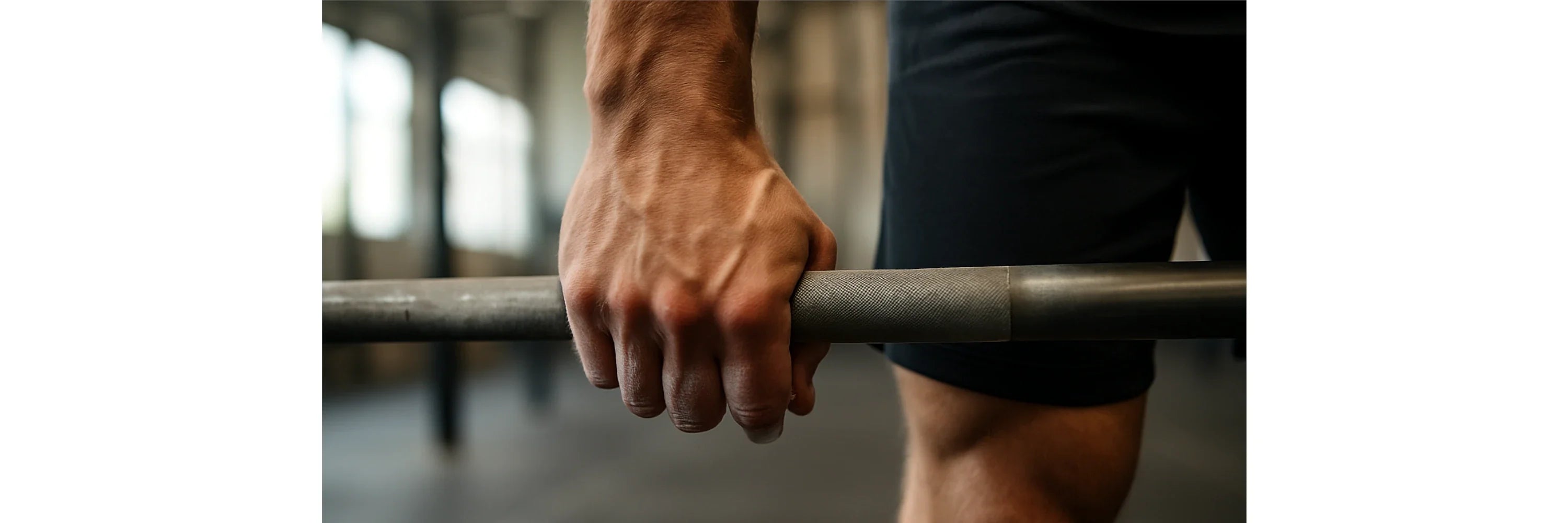
The hook grip: Your new best friend for lifting
In weightlifting or CrossFit, a stable grip is essential. It can make the difference between a successful lift and a lost attempt. The hook grip is a proven technique that helps you lift heavy weights more safely and efficiently. But why is this grip so effective, how exactly does it work, and what challenges does it present? In this article, we take a deeper dive into the hook grip, why it is so important, and how to apply it safely.
Why the hook grip
Imagine you are in a workout and heavy snatches are on the program. Your hands are sweaty, the bar is slippery, and you feel it slowly slipping out of your grip on the third repetition. In addition, the barbell has a tendency to rotate out of your hand due to leverage forces. This is exactly where the hook grip comes into play. This technique offers a much more stable and secure way to hold the bar, especially when it comes to really heavy weights. With the hook grip, you don't just hold the bar with your grip strength; you also use your thumb as an additional anchor.
Why is this so important? Well, the thumb helps you keep the bar firmly in your hands. Even if your fingers get tired, the thumb gives you that extra hold. This means you can lift heavier weights without the bar slipping out of your hands. For dynamic movements like the snatch or clean and jerk, this is indispensable.
How the hook grip works
The hook grip may seem strange or uncomfortable at first, but its application is quite simple. You start by positioning your hand so that your thumb is placed under the bar. Then, you wrap your thumb around the barbell and try to touch your ring finger so that it protrudes on the other side. Now, place your ring finger, middle finger, and possibly index finger over your thumb and press it firmly against the bar. This keeps the thumb securely in place and ensures the bar is held tight. When you then lift the weight, the grip tightens on its own.
Benefits of the hook grip
The biggest advantage of the hook grip is the increased lifting power. With this technique, you can lift significantly heavier weights. Furthermore, the hook grip distributes the load better and reduces fatigue in your hands and forearms. This means you can train longer and more intensely without your grip strength fading. And, of course, the hook grip also offers more security. You minimize the risk of the bar slipping out of your hands, which is especially important for heavy lifts.
Challenges and problems with the hook grip
Of course, the hook grip also has its challenges. The biggest disadvantage is the initial pain. The pressure exerted on the thumb can be very uncomfortable and can even lead to pressure marks and blisters. Especially at the beginning, this can be very painful and requires a short adjustment period. It can take several weeks for your hands and thumbs to get used to the hook grip. A good hook grip tape is helpful here.
Learning the correct technique also takes some time. The hook grip requires precision and can be difficult for beginners to master. Incorrect application can impair the effectiveness of the grip. Additionally, the length of your thumb or the size of your hands can play a role. People with shorter thumbs or smaller hands may have difficulty applying the hook grip correctly.
Tips for mastering the hook grip
To master the hook grip, patience is the key. Start by practicing the hook grip with lighter weights and slowly increase the load to get your hands used to it. Many athletes also use tape around their thumbs to increase comfort and prevent blisters, pressure marks, and excessive calluses. Regular practice is also important to build the necessary grip strength and endurance. It is normal for the hook grip to feel uncomfortable at first, but with time and regular practice, it will become easier and more natural.
Conclusion
The hook grip offers many advantages, especially for lifting heavy weights and performing dynamic movements. However, the initial pain and discomfort as well as the technical challenge require patience, regular application, and possibly some adjustments. With time and continuous training, the hook grip can become an effective and indispensable gripping technique. Once you have gotten used to the hook grip, you will notice how much more stable and secure you can lift heavy weights. So, definitely give the hook grip a try, be patient, and make it a permanent part of your training.



