
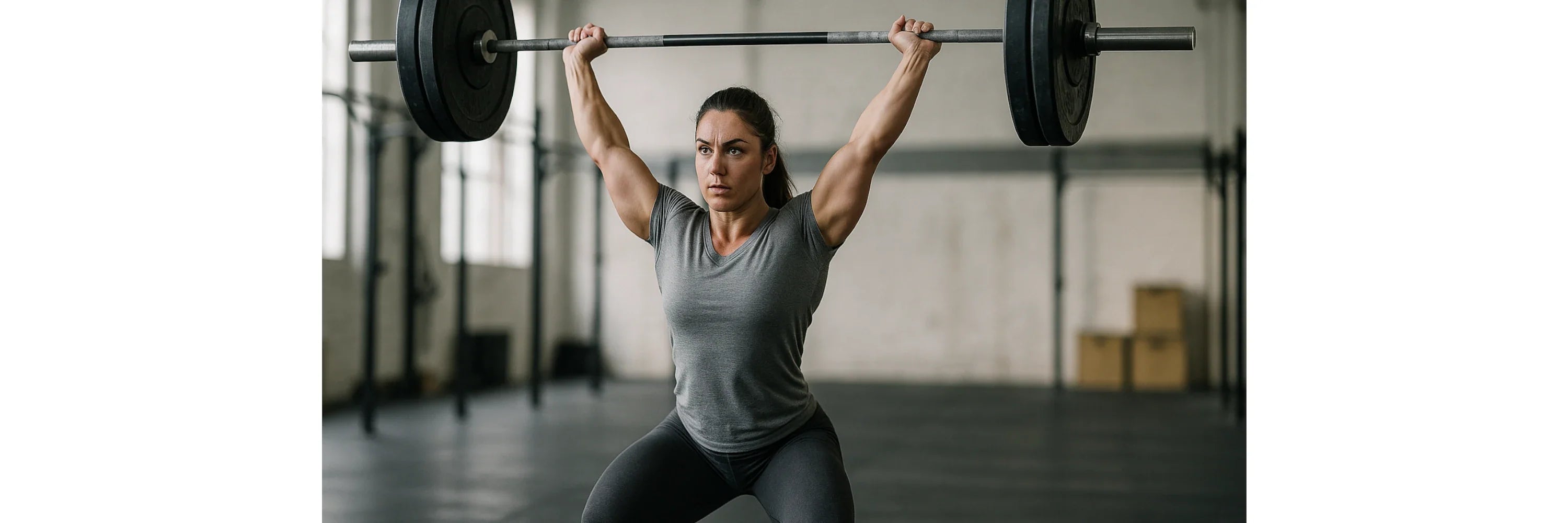
Optimal weightlifting training with blocks
Weightlifting is a demanding sport that combines technique and precision. Beyond the barbell and plates, blocks are an indispensable tool in a weightlifter's training. They allow athletes to train specific movement patterns, refine technique, and strengthen targeted muscle groups. In this article, you will learn everything you need to know about the different types of blocks and how they can take your training to the next level.
What are blocks in weightlifting
Blocks in weightlifting, often referred to as "pulling blocks" or "lifting blocks," are robust constructions made of wood or plastic, available in various heights. They are used to elevate the barbell to a specific height to train targeted phases of the lifting process. These blocks are particularly useful for training the first and second pull, as well as the clean and the jerk.
Which different sizes are available
Blocks come in different sizes to meet various training needs. Here are the most common sizes and their typical applications:
Low blocks: (2-6 inches / approx. 5-15 cm): These are used to slightly increase the starting position, which helps improve first-pull technique.
Medium-height blocks: (12-18 inches / approx. 30-45 cm): These are ideal for training the second pull and the clean from a higher position.
High blocks: (24-36 inches / approx. 60-90 cm): These are used for performing movements from the hang or for specific technique drills.
The modular design of many blocks allows the height to be easily adjusted by adding or removing segments. This offers maximum flexibility and adaptability in training.
What are the benefits of training with blocks
Technique improvement: Blocks allow athletes to focus on specific phases of the lift. By having the barbell resting at a certain height, the athlete can optimize their movement pattern and specifically address weaknesses.
Training efficiency: By using blocks, athletes can perform multiple repetitions quickly and efficiently. After each lift, the barbell is simply reset on the blocks, allowing the athlete to spend more time on the actual training and less energy on picking up the barbell.
Targeted muscle work: By executing movements from a fixed height, specific muscle groups can be targeted. This is particularly useful for identifying and strengthening weaknesses.
Safety: Blocks provide a safe training environment. The stable construction absorbs the impact of dropping the barbell, which minimizes the risk of injury and floor damage.
Are there specialized blocks
Although modular blocks are widely used, there are also specialized blocks designed for certain exercises or requirements. These blocks have specific features and are optimized for specific applications.
Jerk Blocks:
- Size: Often larger and more stable than other blocks
- Features: Frequently equipped with non-slip surfaces and shock-absorbing materials to protect the barbell and the floor.
- Usage: Specially designed for the jerk to make it easier to set down the barbell after the drive.
Pulling Blocks:
- Size: Varies, typically lower than jerk blocks
- Features: Stable and often modular to adjust different heights for the first and second pull.
- Usage: For training the first and second pull as well as the clean.
Snatch Blocks:
- Size: Specially adapted for the snatch starting position
- Features: Often lower than pulling blocks and jerk blocks, but robust and stable.
- Usage: To bring the barbell to an elevated starting position for the snatch.
What does practical application look like
The practical application and setup of weightlifting blocks depend heavily on the training goals and the exercise. Here are some steps for optimal use:
Determining the height: Decide what height is required for your specific exercise. For the jerk, this could be at shoulder height, while different heights are needed for the snatch or clean.
Stackable segments: If you are using modular blocks, stack the segments to reach the desired height. Ensure they are stable and securely aligned.
Positioning the blocks: Place the blocks parallel to each other so that the barbell is securely supported on both sides.
Exercise execution: Perform your exercise, always keeping technique and safety in mind. After each set, the barbell can simply be returned to the blocks.
Tips for training with blocks
Start with low weights: If you are new to training with blocks, begin with lighter weights to get used to the movement and the setup.
Technique before weight: Always focus on clean technique first. Adding more weight should only happen once you have mastered the movement patterns.
Incorporate variation: Use different heights and weights to keep your training varied and effective.
Regular inspection: Regularly check the stability and condition of the blocks to ensure maximum safety.
Conclusion
Weightlifting blocks are an excellent tool for improving technique, targeting specific muscle groups, and increasing training efficiency. Whether for the first pull, second pull, clean, or jerk – blocks offer numerous benefits and can be individually adjusted to meet the needs and goals of every athlete. Jerk blocks are particularly useful for refining jerk technique and developing the specific strength and speed required for this complex movement.



