
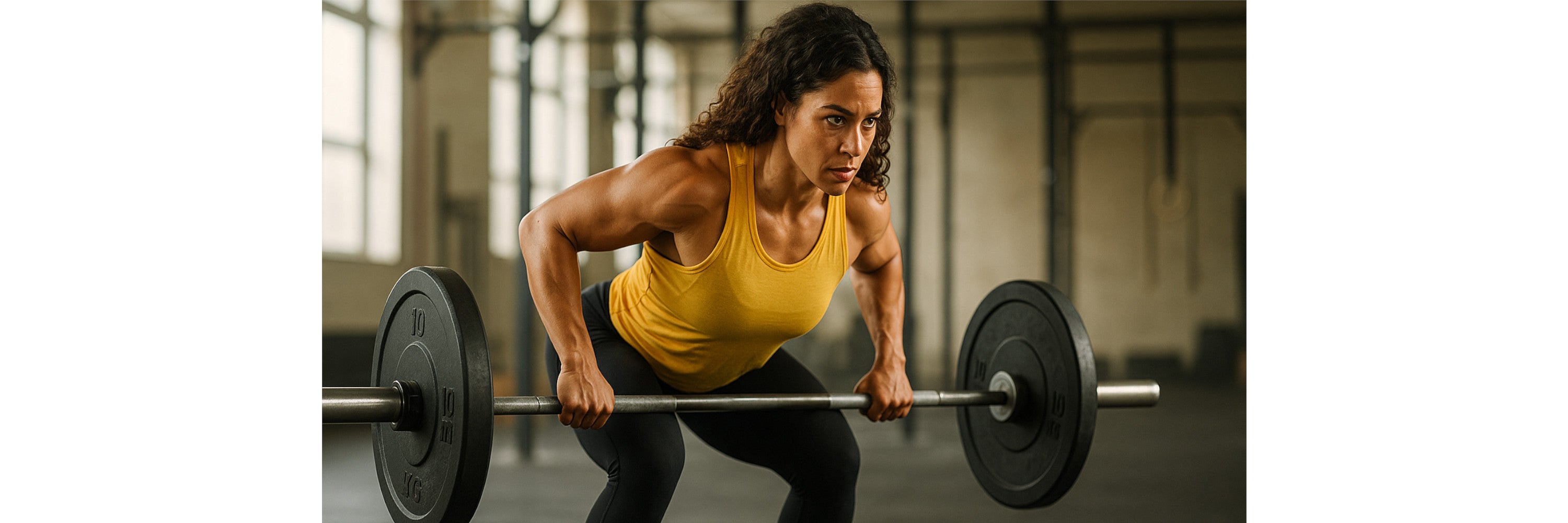
Barbell rows and other exercises for the back
Along with squats, deadlifts, bench presses, and pull-ups, rowing is one of the fundamental exercises in strength training. It is by no means as popular as the bench press, but it plays a vital role in building a strong and muscular back. Whether using a barbell, dumbbell, cable pulley, or TRX, rowing trains not only the large back muscles but also many smaller, often neglected muscles responsible for stable posture, healthy shoulders, and strong grip strength. It is the perfect antagonist exercise to all pushing movements and ensures your body remains capable and prevents injury. But how is it performed correctly? What variations are there, and which muscle groups are primarily trained?
In a nutshell
Condensed, clear, clever – your dose of info in 60 seconds.
- Rowing often involves using momentum from the hips, which reduces the training effect.
- Rowing offers a balance to pushing exercises and prevents muscular imbalances.
- Ensures better shoulder stability and leads to higher performance in pull-ups and muscle-ups.
Let's get started
Why is rowing a good exercise for the back?
Rowing belongs in every good training plan because it achieves several central goals simultaneously: it balances the strain from many push exercises like bench presses or shoulder presses, thereby preventing muscular imbalances that can lead to shoulder problems or a hunched posture. By specifically training the rhomboids, trapezius, and rear deltoids, rowing strengthens shoulder stability, prevents overloading, and improves posture—especially important if you sit a lot or tend to have a rounded back in daily life. At the same time, it promotes grip strength, which is important for deadlifts, pull-ups, kettlebell exercises, strongman training, and many everyday situations. A strong back also has a direct positive impact on other fundamental exercises like deadlifts or squats. Furthermore, it is a clear advantage in Olympic weightlifting, CrossFit workouts, and other sports. Thanks to its versatility—whether as barbell rows, dumbbell rows, on a cable machine, on a fixed machine, or using your own body weight—this key exercise can easily be adapted to any training level and available equipment. Rowing makes you stronger, more stable, and less prone to injury.
How to perform rowing correctly
Starting position: Stand stably or sit (depending on the variation). Keep your back straight, engage your abdominal muscles, tilt your upper body forward (if using free weights), and pull your shoulders down and back—imagine tucking them into your back pockets.
Pulling phase: Guide your elbows back close to your body and consciously squeeze your shoulder blades together as if you wanted to pin a pen between them. The movement comes from the back, not the biceps. Imagine pushing something away with your elbows.
Return phase: Lower the weight slowly and in a controlled manner; the shoulders move forward without the back rounding. No jerky movements—control over weight.
Which muscle groups does rowing train?
Rowing is a fundamental exercise that engages several muscles simultaneously.
Latissimus dorsi: The broad back muscle that spreads out like wings on the side of the back. It gives the upper body the coveted V-taper.
Rhomboids: Small muscles between the shoulder blades that retract and stabilize them.
Trapezius (middle and lower portion): Supports shoulder blade movement and provides stability.
Rear deltoids: Often neglected shoulder muscles, important for shoulder health and upright posture.
Biceps: Assists the pull, especially in the final phase.
Forearm muscles: Trains grip strength, which is advantageous for many other exercises.
Depending on the grip and technique, the focus may vary slightly: a narrow grip emphasizes the lats, while a wide grip targets the upper back muscles.
What are the benefits of rowing in strength training?
Holistic back development: Rowing trains the entire upper back area. A strong back not only ensures strength in other exercises but also provides better posture in everyday life.
Balance for pushing exercises: Those who perform many push exercises should perform an equal number of pull exercises to maintain balance. Rule of thumb: every pushing movement should be matched by at least one equivalent pulling movement.
Postural improvement: Through targeted training of shoulder blade retraction, rounded shoulders often disappear after just a few weeks.
More grip strength: Rowing trains not only the back but also the hands and forearms. Good grip strength is useful for deadlifts, kettlebell exercises, pull-ups, and daily tasks.
Injury prevention: Stable shoulder blades protect the shoulder joint and prevent overuse injuries.
Transfer to other sports: Whether in Olympic weightlifting, CrossFit, or contact sports—strong pulling muscles are almost always an advantage.
Dumbbell rowing and other variations
Barbell rows: A classic in strength training. Offers heavy loads and an ideal muscle stimulus, but requires clean technique.
Pendlay row: A variation of the barbell row where each repetition starts from a complete dead stop on the floor. The upper body is nearly parallel to the floor, and the bar is pulled explosively toward the lower chest before being returned in a controlled manner. This technique promotes back strength, explosivity, and clean pulling power without using hip momentum.
Dumbbell rowing: A classic back exercise where one or two dumbbells are pulled toward the upper body from a bent-over position. Usually, the single-arm version is used, where one hand and one knee are supported on a bench while the other arm pulls the dumbbell upward in a controlled manner. Dumbbell rowing offers a high range of motion, allows for targeted loading of each side of the body, and is easier on the joints than some barbell variations.
T-bar row: A variation where the bar is fixed at one end with a neutral grip. Often performed in a special T-bar apparatus or a landmine station. The grip width can vary. You stand over the bar, grab the attachment, lean forward slightly, and pull the weight toward your upper body in a controlled manner. Due to the neutral grip, this is often easier on the wrists and elbows than classic barbell rows. At the same time, the exercise can be performed with heavy weight, making T-bar rowing a popular choice for building back muscle and strength.
Seated cable row: A good pulling exercise for the back where you sit on a training bench in front of a cable pulley and pull the handle toward your upper body. Keep your back upright or slightly inclined forward, consciously pull your shoulder blades back, and guide your elbows close to your body. The big advantage: the cable pulley keeps the tension constant throughout the entire movement.
Inverted rows: You lie under a fixed bar (e.g., in a rack or Smith machine), grip it shoulder-width or slightly wider, and pull your upper body straight up until your chest touches the bar. Your feet remain on the floor or on an elevation; your body remains tense throughout. This exercise primarily trains the lats, trapezius, rhomboids, rear deltoids, biceps, and core. It is an excellent alternative to pull-ups, especially for beginners.
Ring rows: A bodyweight exercise that uses gymnastic rings instead of a fixed bar. You hold the rings in your hands, lean back with your body straight, and pull yourself up in a controlled manner until your chest touches the rings. The flatter the body angle, the harder the exercise. Feet can also be placed on a box. Ring rows primarily train the lats, trapezius, rhomboids, rear deltoids, biceps, and core muscles. The unstable rings additionally challenge core stability and promote shoulder health.
What does rowing do for CrossFit?
More stable shoulders: In CrossFit, many push exercises and overhead movements are performed. Rowing trains the antagonist musculature, keeps shoulders healthy, and prevents overloading.
Better pull-ups and muscle-ups: Rowing strengthens the lats, rhomboids, and grip strength—exactly the muscles that work during pull-ups, chest-to-bar, or muscle-ups.
More grip strength: A strong grip is worth its weight in gold for deadlifts, farmer's carries, rope climbs, or toes-to-bar. Rowing automatically trains forearms and hand strength as well.
Improved posture during heavy lifts: Strong erector spinae and scapular muscles keep you stable during the clean and jerk or snatch, preventing your upper back from collapsing.
Injury prevention: Especially in the shoulder area, where many CrossFitters experience problems sooner or later. Rowing ensures muscular balance.
Common mistakes when rowing
Too much weight: Technique suffers, the back rounds.
Half reps only: Reduces the training effect.
Using hip momentum: Takes the work away from the back.
Shrugging the shoulders: Strains the neck unnecessarily.
Elbows flared out: Increases the risk of shoulder injury.
Conclusion
Rowing is far more than just a back exercise—it is one of the central fundamental movements in strength training and indispensable for a strong, stable, and balanced upper body. Whether using a barbell, dumbbell, T-bar, cable pulley, or your own body weight—rowing trains not only the lats but also many smaller, often neglected muscles that are crucial for healthy shoulders, upright posture, and strong grip strength. It balances the strain from pushing exercises, increases performance in other lifts, prevents injury, and has a permanent place in both CrossFit and classic strength training. Anyone who wants to become stronger, more stable, and more capable in the long term should firmly integrate rowing into their training plan. Ideally with varied versions and clean technique.



