
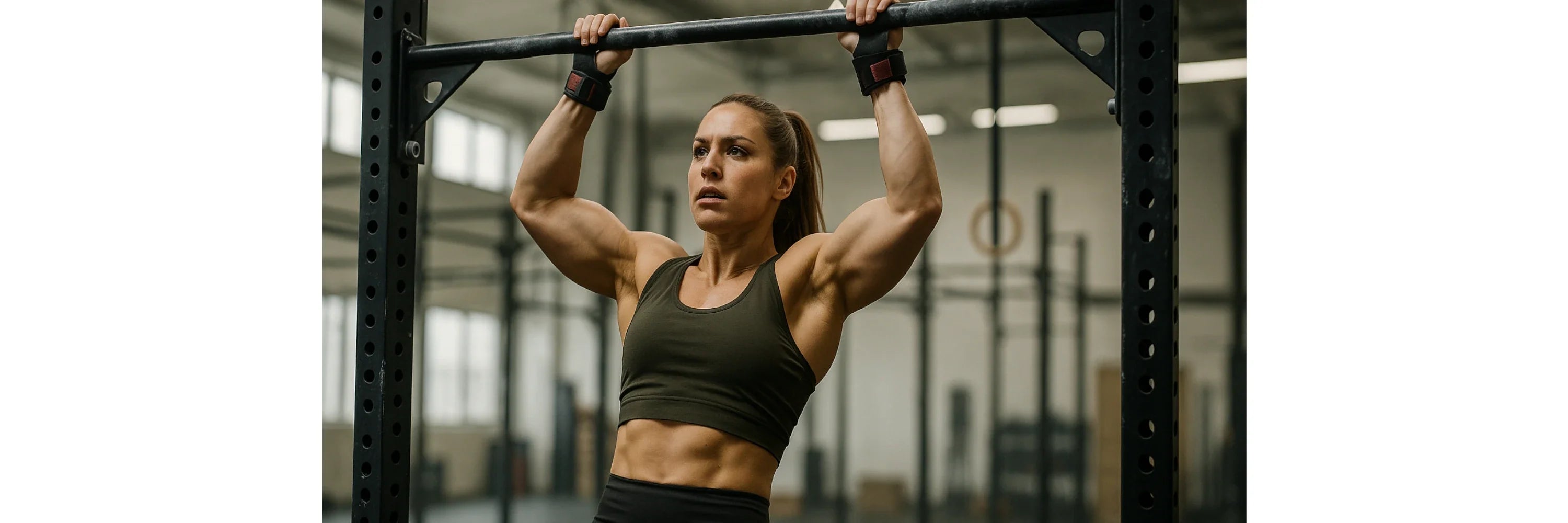
Why are Cheater Grips essential in CrossFit?
In recent years, Crossfit has evolved from a niche sport into a global movement. This type of training combines functional movements performed at high intensity and challenges athletes both physically and mentally. A crucial component of Crossfit training includes exercises such as pull-ups, muscle-ups, and toes-to-bar, which place significant demands on hand strength and grip. This is where Cheater Grips come into play – a useful tool that has now become a permanent part of the equipment for many Crossfit athletes.
What is the origin of Cheater Grips
The idea of bandages that improve grip and protect the hands comes from the world of artistic gymnastics. For decades, gymnasts have used special grips to protect their hands during exercises on the rings or high bar and to ensure a secure hold. These grips were originally made of leather and primarily protected the palm from rips and blisters, which can occur from constant gripping of the bar.
With the rise of Crossfit and the associated popularity of bar exercises, it quickly became clear that Crossfit athletes also needed a similar aid. Thus, the original gymnastic grips were further developed to meet the specific requirements of Crossfit. This involved testing both new materials and adapted designs intended to improve grip, protect the hands, and maintain freedom of movement at the same time.
The term "Cheater Grips" might sound negative at first glance, as it suggests that by using these grips, one is gaining an unfair advantage. In reality, however, they are a valuable tool that helps you as an athlete to increase your performance, avoid injuries, and sustain longer training sessions. The name could therefore be understood more as an ironic allusion to the advantage that these wraps provide.
What different models of Cheater Grips are there
Over time, various models of Cheater Grips have become established, varying according to the individual needs and preferences of the athletes.
Two-Finger Grips: These grips have two holes for the fingers and provide protection for the palm. They offer a good balance between protection and flexibility. For very intense training or for athletes with sensitive skin, they might not provide sufficient protection.
Three-Finger Grips: These grips have three holes for the fingers and cover the palm completely. They are relatively similar to the two-finger grips. They offer protection and stability, making them ideal for high-repetition exercises and heavy loads. They can somewhat restrict the freedom of movement of the fingers, which can be a hindrance during complex movements.
Fingerless Grips: This type of grip is the most common in Crossfit. They cover the entire palm and end just below the fingertips, without needing to guide the fingers through holes. This has the advantage that the skin on the fingers cannot get pinched during exercises. Additionally, they offer great freedom of movement and allow for quick transitions between exercises.
All three versions are available with thick or thin wristbands. Thicker wristbands offer more stability and comfort but also restrict freedom of movement.
What are the possible applications in Crossfit
Cheater Grips are used in many areas of Crossfit, especially for exercises on the bar or rings, but also for movements that require a firm grip.
Pull-Ups: With high repetitions, pull-ups can take a heavy toll on the hands. Cheater Grips help to distribute the load and avoid blisters, which allows athletes to complete more repetitions. For strict pull-ups or exercises where training grip strength is the priority, you should forgo the use of grips.
Muscle-Ups: This demanding movement, which is a combination of a pull-up and a dip, requires a very firm grip. Grips provide additional hold here and protect the palms from intense friction.
Toes-to-Bar: In this exercise, the toes must touch the bar while you are hanging from it. The grip plays a crucial role, and Cheater Grips prevent slipping and reduce grip fatigue.
Deadlifts and other lifting exercises: Here, Cheater Grips are only recommended to a limited extent, as you are explicitly removing grip strength from the exercise, which prevents it from improving. It would be better to use the Hook Grip. Especially in competitions, it is often not permitted to use lifting straps or grips for lifting exercises. In training, or if the regulations allow it, it can certainly make sense to use grips for these exercises from time to time.
Conclusion
Cheater Grips have established themselves as an indispensable tool in Crossfit. They originally stem from artistic gymnastics and were specifically adapted to the needs of Crossfit athletes. With a variety of models, they offer protection, improve grip, and enable athletes to maximize their performance. Although they are called "Cheater Grips," they are anything but "cheating." Rather, they are a clever tool that helps you get the most out of your training while protecting your hands. For any Crossfitter who trains regularly on the bar, they are a worthwhile investment that not only increases performance but also improves the training experience.



