
Should you compare yourself to other athletes in the box?
You’re in the middle of a workout, your heart is racing, sweat is dripping, and your eyes drift to the side for a second. The athlete next to you is going through the WOD like a machine. More weight, better form, a faster pace on the Air Bike, and while you're still struggling with the exercises, the guy is already grabbing his water bottle. "Why can't I do as well as that?" you mutter to yourself. Sound familiar? Comparing yourself to other trainees is omnipresent in CrossFit. But is this comparison actually helpful, or could it even be harmful to you in the long run? Is there an alternative? In this article, we dive deeper into this topic and shed light on why comparing can be problematic, what advantages it nonetheless offers, and which approach is better for your development.
What is the problem with comparing yourself to others
Comparison can quickly turn into frustration or disappointment. Everyone starts with different circumstances.
- Different training experience: Some have been training for much longer, some previously practiced a similar sport like gymnastics or weightlifting.
- Different life situations: Job, family, sleep quality, nutrition, time for training and recovery – everything influences your performance and progress.
- Different physical conditions: Height, weight, genetics, talent, and injury history also play a major role.
All this makes a direct comparison often difficult and sometimes demotivating. Constant comparing can give you the feeling that you aren't good enough and aren't making any progress. This can strip you of the fun and motivation for training in the long term.
What are the advantages of a healthy comparison with others
Comparing yourself to others also has positive sides.
- Motivation and incentive: When you see what is possible, it can spur you on to give your best, keep at it, and push your limits.
- Realistic assessment: You get an orientation of where you stand compared to athletes of a similar level.
- Sense of community: A healthy competition and mutual pushing often strengthen the community and make training more intense and fun.
It is important here that you let yourself be inspired by others instead of letting yourself be dragged down.
The better alternative is comparison with yourself
The best and healthiest way to compare yourself is by looking at your own development. In doing so, you compete against your former self.
- How have you improved over the last month?
- What progress have you made in a year?
-
What goals have you achieved that previously seemed impossible to you?
This approach is much more sensible and motivating in the long term, because you measure your success by your own standards.
How to compare yourself with yourself as objectively as possible
To compare yourself objectively and measurably, there are simple and effective methods.
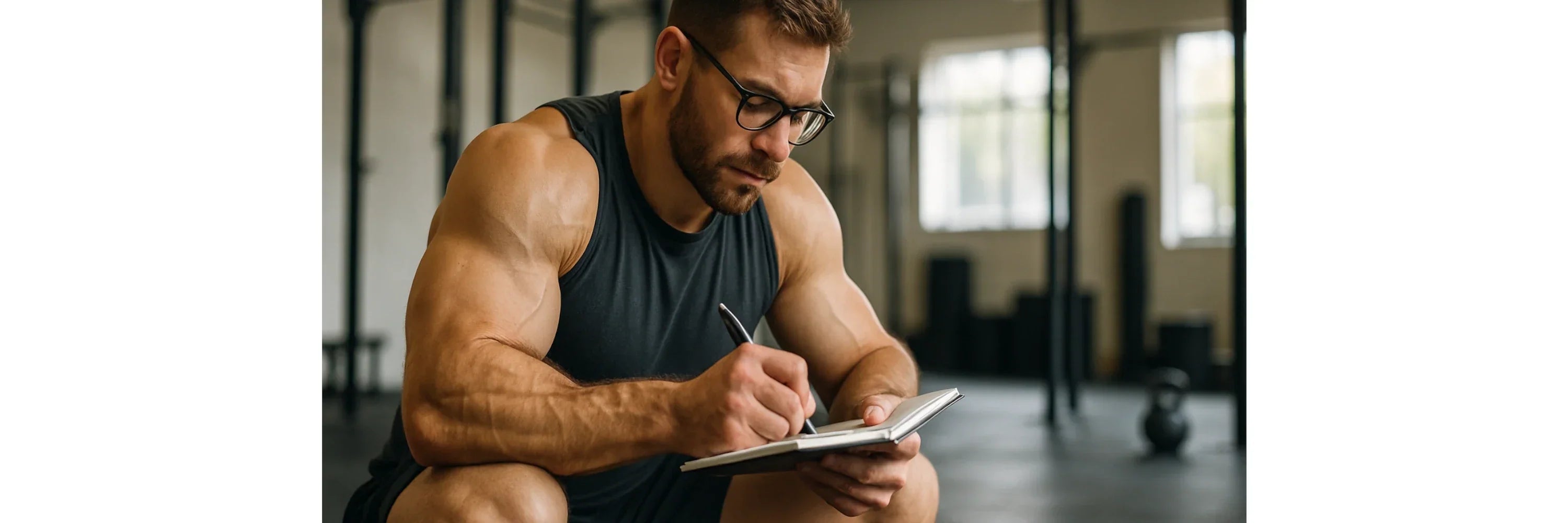
- Keep a training log: Document weights, times, scaling, and how you felt. Most CrossFit boxes use a tracking app that you can use.
- Use benchmark workouts: Regular repetitions of standardized workouts, like Fran, Murph, or Cindy, show clear progress.
- Document PRs: Record your personal bests and compare them regularly.
- Feedback from coaches: Use professional assessments of your technique and performance capacity.
- Subjective feeling: Not everything can be tracked so precisely and put into lists. The following points are also important: How do you feel before and after training? Are you motivated for the WOD? Can you train more regularly because you are sick or injured less often?
Through this systematic approach, you get a clear view of your real progress, regardless of external influences.
Conclusion
Comparison with other athletes is neither fundamentally bad nor exclusively positive. The decisive factor is how you use it: as inspiration and an incentive, it can bring you forward immensely, but as soon as frustration or uncertainty prevails, you should change your perspective. The best comparison is always the one with yourself. Because here, you see the most honest and clearest progress. Focus on your development, document your successes, and above all, enjoy the process. After all, you are not training for others, but for yourself and your personal growth.



